|
|

Sightseeing in the close surrounding
- The valley of Murta with its monastery (XIVth c.)
- The History and Archeology museum
- The Faller museum
- The rice museum
- The Dragut cave museum
- The protected natural area of Albufera: a fresh water lagoon of 35 km²;
thousands of migratory birds to be admired in winter
- The Brosquil protected natural area, at the mouth
of the river Xúquer
and the Saler area, a great pine forest by the sea
- The city of Sueca:
the Sant Pere (XVIIIth c.),
and Mare de Deu de Sales churches
(XVIIth c.),
the Pobrets hospital (1888),
the chapel of Muntanyeta dels Sants de la Pedra (1616)
- The Cullera castle, and
the chapel of Mare de Deu del Castell,
perched on the mountain
- The mozarabic tower and the Sant Bartolomeu church,
in Almussafes
- In Riola, the church of Major Holy Mary (1735)
- In Corbera, the castle
(XIVth and XVth c.)
and the Saint-Vincents parish church

 Valencia
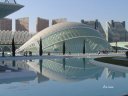
- City of Arts and Sciences,
Prince Philip Science Museum, the Aquarium, the Hemispheric
and Queen Sofia Arts Palace. Several fantastic days out waiting for you here - fun for all the family!
- The nature Park Bioparc in the Cabecera Park, old river bed Turia
- The Music Palace
- The America's Cup exhibition, a permanent exhibition in the marine port
- The Ricardo Tormo Circuit in Cheste
- The Rice Museum
- The Silk public exchange (Llotja de la seda)
- The Museum of the faller's artist guild
- The National Ceramic Museum and Luxury Arts "Gonzalez Martí",
in the Marques de Dos Aguas Palace
- The exhibition center and Lladró's Ceramic Museum
in Tabernes Blanques (10 minutes north of Valencia)
- The architectural linked, the Cathedral, the Micalet tower
and the basilica Virgen de los desamparados
- The Museum of the famous writer Blasco Ibáñez
- The Natural Sciences Museum "Jardines de Viveros",
like the Turia Garden, natural green parks running through the city
- The Valeriola Palace
- The Central Market
- The Columbus Market
- The Round Square
- The North train station
- The Bullring
- The Quart Towers and the Serrano Towers
- The The Valencian Institute of Modern Art, IVAM
- The Valencian Museum of Illustration and Modernity, MVIM
- The Valencia Tourist Bus: from the Queen Square
- Horse and carriage ride from the Queen Square
- Pour des visites guidées en vélo : 96 385 17 40
- International Fair trade of Valencia
- Valencia Trader for flights,
property, events, information and general information
- Terra Mitica: High quality theme park with fun for all ages
- Official Tourism Website for Valencia;
has English pages also; this is a nicely designed website which often lists some great events and places to visit
Just a bit further
South of the Valencia province, watered by the Serpis river,
this area is full of souvenirs of the Borgia family.
The dukedom of Gandia was handed to the Borja
in 1485 by Ferdinand the Catholic. This family name became
famous in its Italian form, Borgia,
when the duke Rodrigo, bishop of Valencia, became Pope in 1492,
under the name of Alexander VI.
His great-grand son, horseman of the empress Elizabeth,
wife of Charles Quint, became Saint Francis Borgia.
Gandia
Gandia is a harbour city of 70,000 people,
an hours drive from Valencia, and half an hour from La Torreta.
You can visit the Saint-Duke palace,
former palace of the Borgia family, and the Holy Mary church,
magnificent piece of gothic architecture (XIIIth c.).
Xàtiva
The Xàtiva castle overlooks in a strategic manner the South
entrances of Valencia. Built by the Romans (Sætabis Augusta),
the place become the Medina Chateba
during the five centuries of Islam brilliant domination.
The king of Aragon, catalan Jake Ist (Jaume I)
conquered the city in 1244. He then enlarged the castle,
and added great walls, secured by thirty towers,
that still dominate the landscape today.
During more than three centuries (1347-1707),
Xàtiva was as important as Valencia,
the capital city of the "Kingdom of Valencia".
You may visit the churches of Saint Felix, Saint Francis, Saint Peter,
the Beneficiència,
and the Col·legiata,
and the museum of Almodí.

|
|